

Most people hear “safe space” and picture a locked door or a security camera. That framing misses something important. Art for safe spaces explained properly goes far beyond physical security. It describes how visual, sensory, and expressive art shapes the emotional and psychological environment around us, making it feel regulated, calm, and genuinely inhabitable for the nervous system. This article covers the evidence, the techniques, and the practical steps you can use to create that kind of safety in your own home, classroom, or community setting.
Table of Contents
- Key takeaways
- What safe spaces really mean and how art supports them
- Safe place drawing as a tool for emotional safety
- Group creative arts therapies and trauma recovery
- Applying art in homes, community programs, and wellness settings
- My perspective on art and genuine emotional safety
- Bring meaningful art into your safe space
- FAQ
Key takeaways
| Point | Details |
|---|---|
| Art shapes emotional safety | Meaningful artwork actively regulates the nervous system, not just the look of a room. |
| Safe Place Drawing is practical | The 2026 expressive arts technique lets anyone build a personal emotional anchor using simple materials. |
| Group art therapy builds resilience | Clinical research shows group creative arts reduce trauma symptoms and support emotional processing. |
| Context determines effectiveness | Setting, facilitation, and participant choice affect how well art creates genuine psychological safety. |
| Personal agency is non-negotiable | Art for safe spaces only works when participation feels voluntary and self-directed, never imposed. |
What safe spaces really mean and how art supports them
Physical safety is a baseline, not a destination. A room can be structurally secure and still feel threatening, chaotic, or emotionally cold. True safety includes the ability to regulate emotions, feel seen, and experience calm without effort. That is the psychological dimension most discussions skip.
Art addresses this gap directly. Visual stimuli communicate to the nervous system faster than words do. A painting with soft atmospheric color and unhurried composition sends a signal of stillness before the viewer has consciously processed anything. This is not a metaphor. Sensory input shapes autonomic arousal, and what hangs on a wall or sits in a room contributes to whether the body reads the environment as safe or threatening.
The role of art in creating safe spaces operates through several mechanisms:
- Sensory regulation: Calming color palettes, soft textures, and gentle imagery lower physiological arousal in a way similar to slow breathing or quiet sound.
- Emotional anchoring: Familiar artwork becomes a cue the brain associates with safety over time, functioning like a personal landmark for calm.
- Symbolic belonging: Art that reflects identity, nature, or personal meaning signals to the occupant that this space was made for them.
- Distraction and redirection: Engaging with a piece of art draws attention away from intrusive thoughts or stress responses without requiring effort.
Pro Tip: When choosing art for a bedroom or therapy room, prioritize low-contrast, cool-to-neutral palettes over bold, high-saturation work. The goal is engagement without stimulation.
Safe place drawing as a tool for emotional safety
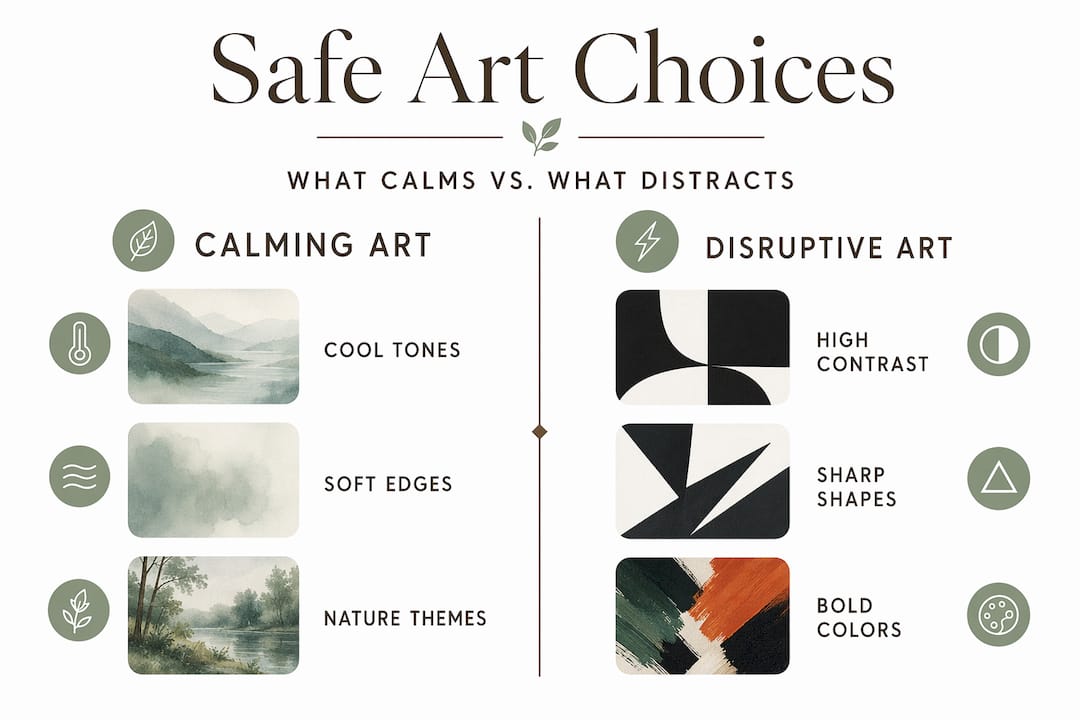
One of the most accessible and evidence-backed techniques in art and safe space concepts is the Safe Place Drawing activity. The premise is simple. You invite someone to draw what safety feels like to them, using color, shape, and image rather than words.
The 2026 methodology, developed within expressive arts therapy, is specific about how this works. Participation is invited, not instructed, which matters enormously. The moment someone feels required to perform safety, the emotional benefit collapses. The person leading the activity presents materials and possibility, then steps back.
Here is how the process typically unfolds in a home or classroom setting:
- Gather low-pressure materials. Oil pastels, soft watercolors, or colored pencils work well. Avoid materials that feel high-stakes or messy in ways that create anxiety.
- Set the tone before starting. A few minutes of quiet, soft music, or slow breathing prepares the nervous system to shift out of alert mode.
- Offer the invitation. Say something like: “If you wanted to draw a place, real or imagined, where you feel completely safe, what might that look like?”
- Allow full choice. The participant chooses their subject, colors, and level of detail. There is no wrong answer and no evaluation.
- Discuss only if welcomed. After completion, ask open questions rather than interpretive ones. “What does this place feel like?” rather than “What does this color mean?”
- Make the drawing accessible. Safe space drawings act as nervous-system cues that individuals keep accessible for self-soothing during stress or overwhelm. Suggest storing it in a desk drawer, notebook, or bag.
| Format | Best setting | Key benefit |
|---|---|---|
| Individual drawing | Home, therapy session | Deep personal agency and private processing |
| Group drawing | Classroom, community program | Shared experience without direct verbal disclosure |
| Ongoing art journal | Home or workplace | Cumulative emotional anchoring over time |
The technique emphasizes that participant agency and pace are not soft suggestions. They are the mechanism. When a person controls their own creative process, they practice the experience of safety rather than just imagining it.
Pro Tip: If you are introducing this activity in a group setting, complete the drawing yourself alongside participants. Your own engagement communicates that this is a shared, non-evaluative experience.
Group creative arts therapies and trauma recovery
Artistic expression in safe spaces takes on added complexity in group settings, particularly for trauma survivors. Group Creative Arts Therapies, often abbreviated as CATs, operate through what researchers call relational aesthetic interventions. The art itself is the medium of connection, not just personal expression.
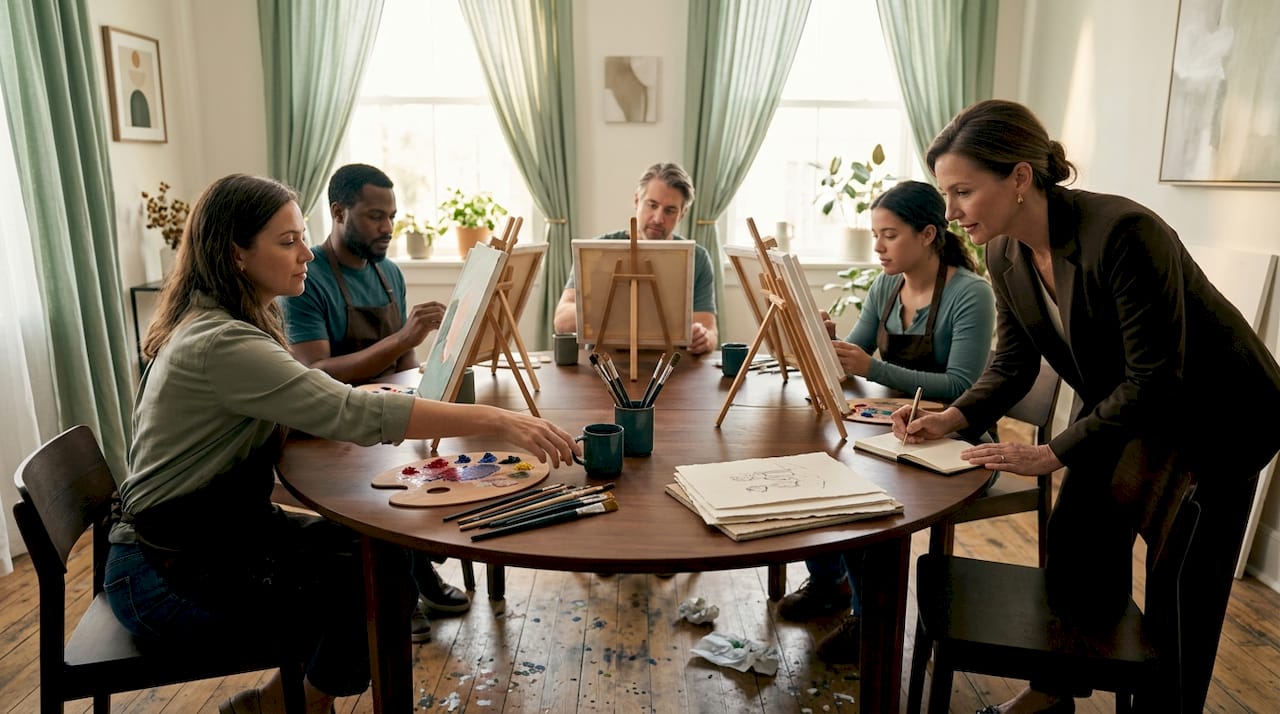
CATs promote body awareness, embodiment, externalization, and meaning-making in ways that purely verbal therapies do not. When trauma survivors externalize difficult experiences through image-making rather than narrative disclosure, they can process emotional content without the re-traumatization risk that verbal retelling sometimes carries. Artmaking in trauma-informed practice serves as a safer alternative to verbal disclosure, offering symbolization and embodied processing instead.
The benefits documented in clinical research include:
- Reduction in physiological stress responses during sessions
- Improved emotional vocabulary as participants reflect on their own imagery
- Increased tolerance for sitting with difficult feelings without acting out or shutting down
- Strengthened sense of shared humanity through group witnessing of each other’s work
A 2026 meta-analysis on group-based art interventions showed a standardized mean difference of -0.93 favoring art interventions for late-life depression, with clinical settings showing the strongest results. That is a substantial effect. It confirms that the impact of art on community safety and mental health is not incidental. It is measurable.
| CATs in clinical settings | CATs in community settings |
|---|---|
| Structured, facilitated by trained therapist | More flexible, often peer-led or lightly guided |
| Focus on trauma processing and diagnosis-specific goals | Focus on connection, creativity, and general well-being |
| Stronger measured outcomes for clinical populations | Higher accessibility and lower barrier to participation |
| Less scalable due to training requirements | More scalable for community programs and nonprofits |
The delivery format matters significantly. Art therapy for safe spaces works differently in a hospital room than in a community arts center, and that difference is not about quality. It is about fit, structure, and the relationship between facilitator and participant.
Applying art in homes, community programs, and wellness settings
Understanding the benefits of art in safe environments is one thing. Actually creating those environments requires specific, deliberate choices. The gap between “I have art on my walls” and “this space genuinely supports my emotional well-being” comes down to intention, placement, and personal meaning.
When choosing art for your own safe space, consider these factors:
- Personal resonance over trend. Art that connects to your own memory, identity, or emotional history regulates your nervous system more effectively than art chosen for aesthetic trend alone.
- Scale and placement. A single large work at eye level creates a focal point for calm. Multiple small works without intentional arrangement can increase visual noise rather than reduce it.
- Thematic coherence. Art rooted in themes of nature, belonging, or stillness consistently supports calm. Works centered on tension or ambiguity can be powerful but may not serve a regulation purpose.
- Accessibility. Just like the Safe Place Drawing technique, your personal art anchor should be visible without effort. If it is behind a door or in a dim corner, it will not function as a cue.
The Gathering Place in Denver offers a real-world example of art wellness in action. Weekly art classes there provide creative coping and trauma respite for people experiencing homelessness, with no requirement to produce anything beyond what feels right that day. The low-barrier format is deliberate. Art works best when it does not create new pressure.
Research confirms that contextual factors influence art therapy outcomes more than the art content alone. The same painting in a noisy, poorly lit room produces a different response than in a calm, intentionally arranged space. For wellness programs and community initiatives, this means that art classes embedded in supportive environments produce compounding benefits because the space itself reinforces what the art communicates.
My perspective on art and genuine emotional safety
I have painted for most of my adult life, and I spent years focused almost entirely on the visual outcome of a piece. Getting the light right, the composition, the palette. What shifted my understanding was working through my own difficult periods and noticing that certain pieces I had made functioned differently in my space than others. Not better, exactly. Differently. Some paintings seemed to hold something for me.
What I have come to believe, after hundreds of original works and conversations with collectors from all over the world, is that most people underestimate how much their environment is communicating to their nervous system at any given moment. They redecorate without thinking about regulation. They add art without asking what they need the space to do for them.
The obstacle I hear most often is that people do not feel they deserve to prioritize this. They will invest in a good mattress or quality food before they invest in what they look at every day. That ordering makes sense in some ways, but it underestimates how consistently art works on you without you consciously engaging with it. A piece like A Place To Stay was not made to be decorative. It was made to offer something. That distinction drives everything I create at Annapinnii.
The encouragement I would offer is this: choosing art for your space is not a luxury decision. It is an environmental one. Start with one piece that genuinely reflects something you need to feel more of. Not what looks good to someone else. What speaks to you.
— Anna
Bring meaningful art into your safe space

At Annapinnii, every original painting and fine art print is created with the intention of contributing something real to the spaces where people spend their lives. The collections draw from themes of healing, stillness, nature, and the kind of belonging that does not need to be explained. If the ideas in this article have resonated with you, exploring these works is a natural next step.
The original painting You Were Never Lost was made specifically around themes of emotional refuge and finding calm after disorientation. It works as both a visual anchor and a quiet affirmation. For those who prefer accessible options, the fine art prints collection makes these pieces available without the investment of an original. Each print is produced to preserve the softness and atmospheric depth that makes the work function the way it does in a room. Explore what resonates, and let the art work for you.
FAQ
What is art for safe spaces?
Art for safe spaces refers to the intentional use of visual art, expressive art activities, and art therapy to create environments that support emotional regulation, calm, and psychological safety. It goes beyond aesthetics to address how sensory and symbolic elements in art affect the nervous system.
How does art promote feelings of safety?
Art promotes safety by providing sensory cues that lower physiological arousal, offering symbolic anchors for personal identity and calm, and creating non-verbal channels for emotional processing. Soft palettes, familiar imagery, and personally resonant themes are especially effective.
What is the Safe Place Drawing technique?
The Safe Place Drawing technique is an expressive arts activity in which individuals are invited to draw their personal sense of safety using colors and shapes. The 2026 methodology emphasizes voluntary participation and personal agency, with the finished drawing kept accessible as an emotional regulation tool.
Can group art therapy create safe spaces for trauma survivors?
Yes. Group creative arts therapies use relational aesthetic interventions to help trauma survivors externalize and process difficult emotions without verbal disclosure, building resilience and a shared sense of safety within the group.
Does the setting affect how well art creates safe spaces?
Significantly. Research shows that delivery context shapes outcomes more than the art content alone. Clinical settings with trained facilitators show stronger measurable effects, while community settings offer broader accessibility. Both require intentional design to be effective.
0 comments