

Most people who care deeply about art still make the same mistake: they hang it wrong. Not wrong in terms of taste, but wrong in terms of placement, proportion, and purpose. A painting that could anchor a room emotionally ends up floating on a wall, disconnected from the furniture below it, centered at a height that works for no one. In 2026, art display is getting a serious rethink. This article covers the foundational rules that still hold, the emerging trends reshaping how we interact with art at home, and a clear comparison of your best options so you can make decisions that work for your specific space.
Table of Contents
- Defining your art display goals for 2026
- Timeless principles for hanging art: Eye-level and furniture relationships
- Embracing texture: The rise of tactile and textile art
- Interactive and tech-forward art installations
- Comparing display ideas: Which approach suits your home?
- Our perspective: Why the best art displays make you feel, not just look
- Bring your art vision to life with distinctive pieces
- Frequently asked questions
Key Takeaways
| Point | Details |
|---|---|
| Hang at eye level | Center art 57–60 inches from the floor and keep 6–8 inches above furniture for best visual balance. |
| Prioritize texture | Tactile and textile art forms are trending, and display choices should enhance rather than obscure texture. |
| Embrace interaction | Tech-forward installations create dynamic, emotionally engaging art experiences at home. |
| Choose by intention | Define your emotional and aesthetic goals first to select the best art display approach for your space. |
Defining your art display goals for 2026
Now that you’ve recognized the importance of intentional art display, let’s define specific goals to guide your approach.
Before you pick up a hammer or browse for frames, it helps to ask a simple question: what do you want this art to do? That question sounds obvious, but most homeowners skip it entirely. They buy a piece they love, find an empty wall, and hang it there. The result is art that exists in a room rather than art that works within it.
Defining your goals means thinking about three things: mood, focus, and interaction.
Mood refers to the emotional atmosphere you want the artwork to create or reinforce. A soft, semi-abstract landscape creates a very different feeling than a bold geometric print. Before placing any piece, consider whether the room needs calm, energy, warmth, or stillness.
Focus refers to where you want the eye to go. Art can anchor a seating area, draw attention to an architectural feature, or create a natural stopping point in a hallway. Knowing what you want the viewer to notice first helps you choose scale, placement, and framing.
Interaction is the newest consideration for 2026. Do you want people to walk past the art, or pause in front of it? Do you want it to invite touch, spark conversation, or change with the light? These questions now have practical answers, which we’ll cover in the sections on tactile and tech-forward display.
As design pros note, the most common failure modes are not buying the wrong art style. They are hanging it too high, leaving poor relationships to furniture, or treating the wall as an afterthought rather than integrating it into room composition.
Here are the most common placement mistakes to avoid:
- Hanging art too high, especially above eye level when seated
- Ignoring the furniture below the artwork and leaving a gap that feels disconnected
- Using art that is too small for the wall, which makes the space feel unresolved
- Grouping pieces without a clear logic or visual anchor
- Choosing frames that compete with the artwork rather than support it
Pro Tip: Before you hang anything, tape paper cutouts of your artwork to the wall and live with the placement for 24 hours. This simple step saves a lot of unnecessary holes and reveals proportion problems you would not catch otherwise.
Timeless principles for hanging art: Eye-level and furniture relationships
With your goals set, it’s essential to master a few timeless hanging principles that still matter in 2026.
The rules around hanging height have been around for decades, and they exist for a good reason. When art is placed at the right height, viewing it feels effortless. When it is too high or too low, viewers unconsciously feel something is off, even if they cannot name the problem.
The standard recommendation from interior designers and gallery curators is to center artwork at 57 to 60 inches from the floor to the center of the piece. This range aligns with the average human eye level when standing. As design experts confirm, art centered at 57 to 60 inches and spaced 6 to 8 inches above furniture tops feels anchored and visually correct.
Follow these steps to hang art correctly every time:
- Measure 58 to 60 inches up from the floor and mark that point lightly with a pencil. This is where the center of your artwork should land.
- Measure the height of your artwork and divide by two. Subtract the distance from the top of the frame to the hanging hardware. This gives you the exact point where your nail or hook should go.
- If the artwork hangs above a sofa, console, or bed, leave 6 to 8 inches of space between the top of the furniture and the bottom of the frame.
- For gallery walls, treat the entire grouping as one unit. Find the center of the whole arrangement and align that center point with the 58 to 60 inch mark.
- Step back and check the relationship between the art and the furniture. The artwork should feel like it belongs to the furniture arrangement, not like it is floating independently above it.
“Art should be centered at eye level around 57 to 60 inches and spaced 6 to 8 inches above furniture tops to feel anchored.” This principle applies whether you are hanging a single statement piece or building a large gallery wall.
Pro Tip: In rooms where people spend most of their time seated, such as dining rooms or reading nooks, adjust the center point down slightly to around 55 to 57 inches. Eye level changes when you sit, and the art should follow.
Embracing texture: The rise of tactile and textile art
Having covered classic techniques, let’s explore the emerging world of texture as a display priority for 2026.
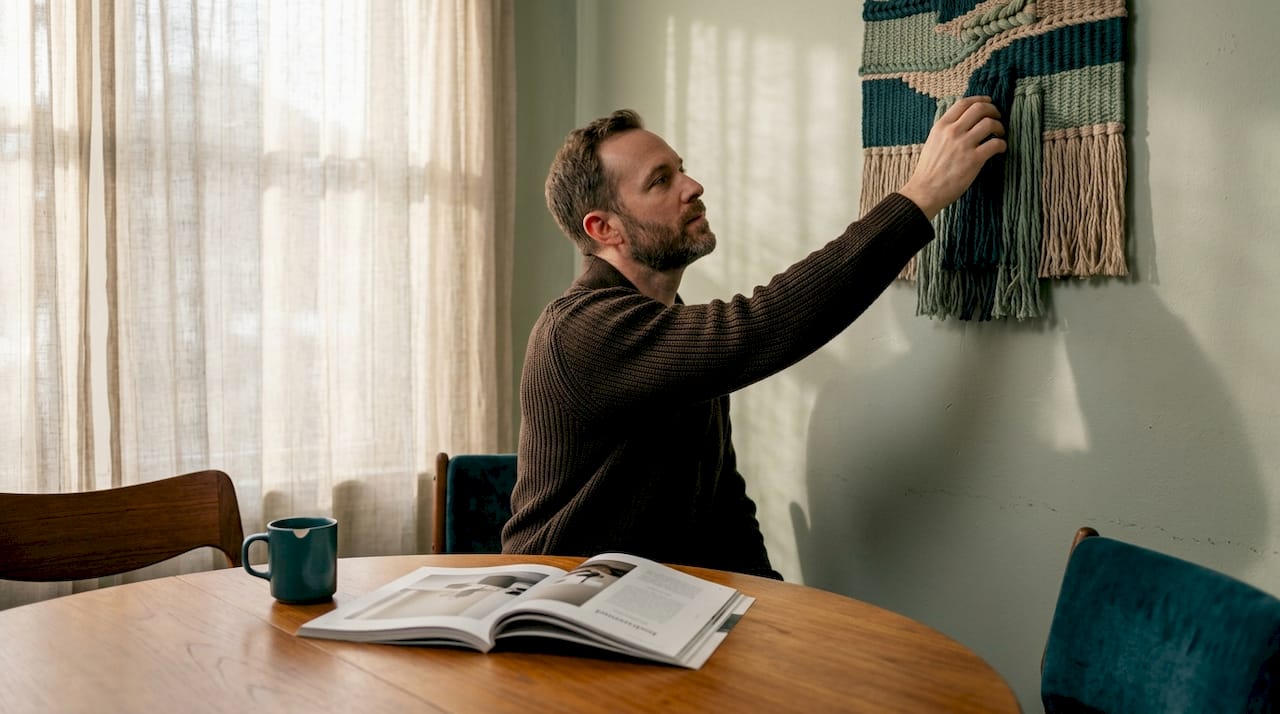
One of the clearest shifts in interior design right now is the move away from flat, framed prints toward art that has physical presence. Textile art, tapestries, woven pieces, and three-dimensional wall works are appearing in homes that previously relied entirely on canvas or paper. This is not just a visual trend. It is a sensory one.
2026 trend reporting points clearly toward tactile art forms, especially textile art and tapestries, as a defining direction for materiality in interior spaces. The appeal is straightforward: textured art adds depth that flat art cannot, and it interacts with light in ways that shift throughout the day.
Why tactile art is gaining ground:
- Woven and textile pieces absorb sound, which improves room acoustics in open-plan spaces
- Texture creates visual interest that changes depending on the angle and time of day
- Handmade textile work signals craft and intentionality in a way that mass-produced prints do not
- Three-dimensional pieces create shadow and relief that add architectural interest to flat walls
The key to displaying textured work well is removing the barriers between the viewer and the surface. Glass frames, which work beautifully for paper prints and photography, actively undermine the appeal of tactile art. The reflection and distance created by glass flatten the visual effect and prevent any sense of physical connection.
Best display methods for textured and textile art:
- Open mounting: Hang woven pieces directly on a rod or dowel so the edges and texture remain fully visible
- Shadow boxes: Use deep shadow box frames without glass to give three-dimensional pieces room to breathe while keeping them protected
- Floating frames: These frames hold canvas or textile work slightly away from the backing, creating a subtle shadow that enhances the three-dimensional effect
- Wall-mounted rods: Tapestries and woven works hang beautifully from simple wooden or metal rods that become part of the visual composition
Pro Tip: Place a directional light source, such as a picture light or angled track light, above textured art. The raking light across the surface will reveal the full depth of the texture and make the piece look dramatically more interesting at night.
Interactive and tech-forward art installations
While texture adds sensory depth, technology is opening new creative possibilities in art display for 2026.
The idea of a living wall is no longer limited to plants. In 2026, a growing category of tech-integrated art installations is changing what it means to display something on a wall. These are not television screens trying to look like art. They are purpose-built systems designed to generate, respond to, and evolve with the environment around them.
New 2026 prototypes blend art with functionality through wall installations that combine screens and generative visuals with audio, shifting the entire concept from static decor to reactive experience. Products like the Govee Lightwall use color-changing LED panels in aluminum frames that can be programmed to respond to music, time of day, or ambient light levels.
| Display type | Best for | Key advantage | Main limitation |
|---|---|---|---|
| LED lightwall panels | Open-plan living areas | Fully programmable, mood-responsive | Higher upfront cost |
| Digital canvas screens | Bedrooms, home offices | Rotates artwork collections | Requires power and connectivity |
| Audio-reactive installations | Entertainment spaces | Responds to music in real time | Complex setup |
| Projection mapping | Accent walls, large surfaces | Transforms entire surfaces | Needs controlled lighting |
Best practices for integrating tech art into residential spaces:
- Choose systems with matte or low-glare surfaces to reduce the screen-like appearance during the day
- Ensure cable management is built into the installation plan before mounting anything
- Select platforms that allow you to load your own images or artwork alongside generated content
- Use smart home integration so the display adjusts automatically with room lighting and time of day
- Keep the surrounding wall simple and uncluttered so the installation remains the clear focal point
Comparing display ideas: Which approach suits your home?
To tie it all together, let’s directly compare these innovative and classic approaches so you can decide with confidence.
As Vogue’s 2026 design reporting makes clear, styling and display choices can make or break the emotional effect of art in a space. The right method depends on your room, your lifestyle, and what you want the art to accomplish.
| Display approach | Ideal room | Emotional effect | Maintenance level | Cost range |
|---|---|---|---|---|
| Classic framed art at eye level | Any room | Calm, grounded, familiar | Low | Low to high |
| Gallery wall grouping | Living rooms, hallways | Dynamic, personal, layered | Medium | Medium |
| Textile and tactile art | Bedrooms, reading rooms | Warm, sensory, handcrafted | Low | Medium to high |
| Tech-integrated lightwall | Living areas, studios | Energetic, adaptive, modern | Medium to high | High |
| Shadow box and 3D display | Accent walls, entryways | Sculptural, distinctive | Low | Medium |
Use this checklist to narrow your choice:
- Identify the primary function of the room. Relaxation spaces benefit from calm, grounded displays. Social spaces can support more dynamic or interactive options.
- Consider how much the art will change. Static pieces suit stable, long-term arrangements. Tech displays suit people who want variety and responsiveness.
- Assess your lighting. Textured art needs directional light. Tech installations need controlled ambient light. Classic framed art works in most lighting conditions.
- Set a realistic budget that includes framing, hardware, lighting, and installation, not just the artwork itself.
- Think about the people who live in the space. Homes with young children or pets may need more durable, low-maintenance display solutions.
Our perspective: Why the best art displays make you feel, not just look
Having explored all your options, here is our take on what truly matters when displaying art at home.
Most homes fail to get the most from their art not because of poor taste, but because of a fundamental misunderstanding of what art is supposed to do in a space. It is not background. It is not decoration in the way a throw pillow is decoration. Art is a participant in the emotional life of a room.
When we see homes where art genuinely works, the pieces are not just hung at the right height or paired with the right frame. They are chosen and placed with a clear sense of what the room needs to feel like. A painting that captures stillness belongs in a room that is meant to offer rest. A piece that carries energy and movement belongs where people gather and talk.
The trend toward tactile and interactive art is, at its core, a response to this understanding. People are not reaching for textile art because it is fashionable. They are reaching for it because it asks something of the viewer. It invites you to look more closely, to notice the weave of the thread or the shadow cast by a raised surface. That invitation is what separates art that transforms a space from art that merely fills it.
Our honest recommendation: choose art that you respond to before you think about where it will go. The placement decisions are solvable problems. The emotional connection is not something you can engineer after the fact. Start with the feeling, then work backward to the wall.
Bring your art vision to life with distinctive pieces
Ready to apply these ideas? Here are curated collections that pair perfectly with every display strategy highlighted above.
Whether you are building a calm bedroom gallery, creating a tactile focal point in your living room, or simply looking for one piece that carries genuine emotional weight, the right starting point matters.
The You Were Never Lost painting is a strong example of how a single original work can anchor an entire room’s emotional atmosphere. Its soft, atmospheric palette works beautifully at eye level above a sofa or console, exactly where the principles in this article place it. For those building a gallery wall or exploring multiple display formats, Annapinnii’s fine art prints offer the same emotional depth in a format that suits a wider range of budgets and spaces. Each print is produced to preserve the tonal subtlety of the original, making them a reliable choice for any of the display approaches covered here.
Frequently asked questions
What is the ideal height to hang art in 2026?
Experts recommend centering art at 57 to 60 inches from the floor, which aligns with average eye level and creates a comfortable, grounded viewing experience in most rooms.
Are textile and tactile art forms really trending for home interiors?
Yes. Tactile works like tapestries and textile art are among the defining material trends of 2026, with designers recommending open-mount and glass-free display methods that allow the full texture to read.
How can technology enhance art displays in modern homes?
Interactive installations like LED lightwalls and audio-reactive visual systems transform static wall art into responsive, mood-adaptive experiences that shift with the room’s environment throughout the day.
Should I always avoid glass frames for textured art?
For textured and textile pieces, avoiding glass is strongly recommended so viewers can fully appreciate the surface depth and, where appropriate, engage with the tactile quality of the work directly.
0 kommenttia