

Choosing art for your home has always been personal, but in 2026 the stakes feel higher. You want pieces that do more than fill wall space. You want them to mean something, to settle the room, to tell your story. Interior design coverage confirms this shift: the dominant design ambition this year centers on meaning, storytelling, and emotionally restorative spaces. This guide walks you through how to select art with intention, which types work best, how they compare, and how to place them so your home feels exactly like you need it to feel.
Table of Contents
- How to choose art that resonates: 2026’s key criteria
- Top curated art inspirations for emotional, nature-rich spaces
- Comparing curated art inspirations: comfort, storytelling, and fit
- Situational picks: matching art to your home’s mood and life
- Why personal meaning should drive your curated art, more than trends
- Bring emotional, nature-inspired art into your home
- Frequently asked questions
Key Takeaways
| Point | Details |
|---|---|
| Prioritize comfort and meaning | Select art that aligns with your emotional needs and personal story, the hallmark of 2026’s design shift. |
| Nature-inspired art restores | Biophilic and landscape pieces foster comfort and a calming atmosphere in contemporary homes. |
| Compare for personal fit | Weigh emotional resonance, comfort, and versatility when choosing art for each room. |
| Authenticity outlasts trends | Follow your narrative and taste for sustainable, restorative art curation rather than chasing yearly aesthetics. |
How to choose art that resonates: 2026’s key criteria
With the growing emphasis on meaning and comfort, it helps to have a clear set of criteria before you start browsing. Without a framework, it is easy to buy something that looks right in a shop or on a screen but feels off once it is on your wall.
The most useful criteria for 2026 art selection are:
- Emotional resonance. Does the piece produce a genuine feeling when you look at it? Not just visual interest, but something that connects to memory, longing, or calm.
- Storytelling. Does it suggest a narrative, a place, or a moment? Art that implies a story gives you something to return to over time.
- Comfort and softness. Does the palette, subject, or mood support a sense of ease in the room? Harsh or agitating imagery works against restorative spaces.
- Nature connection. Does it bring the outside in, whether through landscape, organic form, or nature-inspired color? This is one of the strongest signals of 2026 design direction.
- Personal fit over trend fit. Does it reflect your identity, your history, or your aspirations? Trend-aligned pieces that feel foreign to you will date quickly.
“55% of global respondents are prioritizing comfort in home aesthetics for 2026.”
That number is significant. Comfort is not a secondary concern this year. It is the primary driver. When you assess a piece, ask whether it would make the room feel more settled or more restless. Art that scores high on comfort tends to use soft transitions, organic shapes, and palettes drawn from natural light.
Authenticity matters just as much. Pieces that reflect your actual life, your values, or your emotional world will outlast anything you chose because it was trending on social media. A good test: live with a print-out or a digital preview of the piece for a few days before committing. If you stop noticing it, it may not have the resonance you need. If you keep looking at it, that is a reliable signal.
Pro Tip: Before purchasing, save the image as your phone wallpaper for a week. If it still feels right after seven days of daily exposure, it is likely a strong personal fit.
Works like the Almost What You Thought print demonstrate how semi-abstract landscapes can score high across all five criteria at once, combining emotional suggestion with natural reference and a palette that supports calm.
Top curated art inspirations for emotional, nature-rich spaces
Now that you know what to look for, here are standout curated art inspirations to actualize emotional and nature-rich atmospheres in your home.
Dreamy landscape paintings. Semi-abstract landscapes are one of the strongest choices for 2026 spaces. They suggest place without being literal, which means they invite personal projection. You see your own quiet forest, your own still lake. The ambiguity is the point. Placed in a living room or bedroom, a landscape painting creates a visual anchor that feels both grounding and expansive. Soft atmospheric palettes, particularly those drawing on mist, dusk, or early morning light, support the restorative mood that 2026 interiors prioritize.
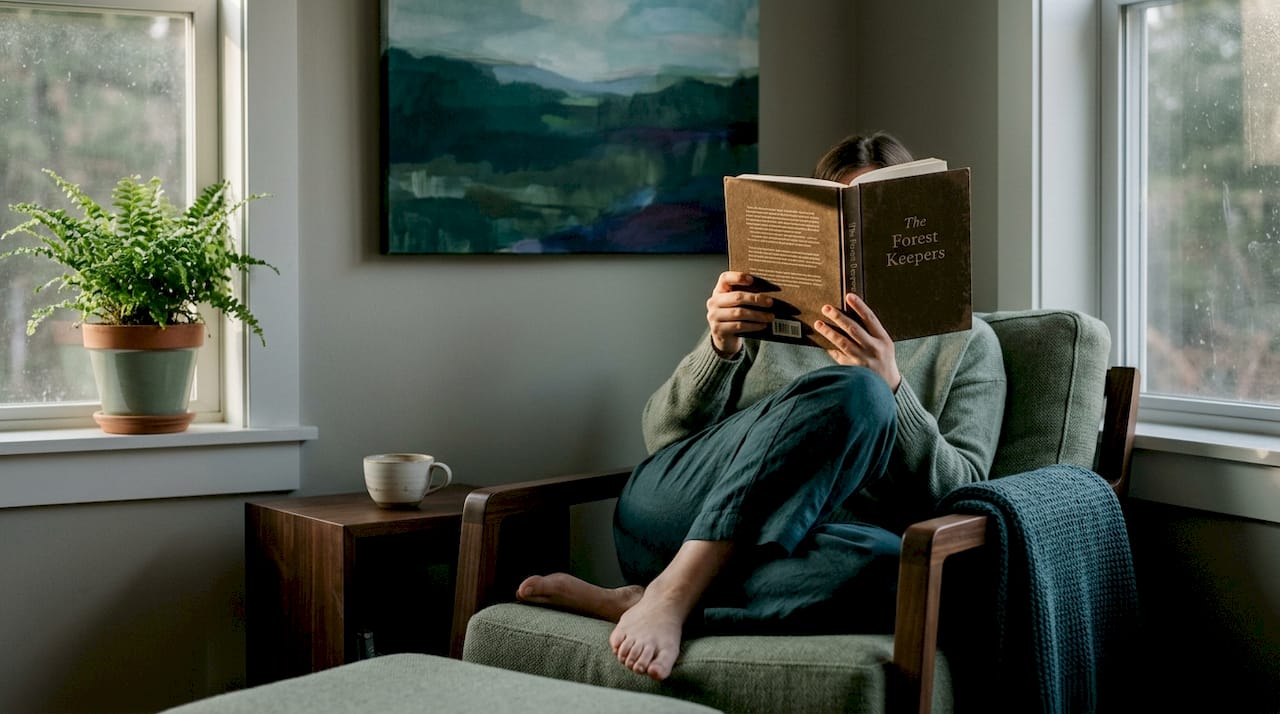
Emotional abstract works. Abstract art with an emotional rather than purely formal intention reads differently from decorative abstraction. When a piece is built around a feeling, such as longing, safety, or hope, that intention tends to come through even when the viewer cannot name it. These works suit spaces where you want energy without noise. A bedroom or reading corner benefits from this kind of quiet intensity.
Nature-based color studies. Not every nature-inspired piece needs to depict a recognizable scene. Color studies drawn from forest floors, winter skies, or coastal light carry biophilic (nature-connecting) value through palette alone. Nature-linked art signals a shift from biophilia as a showpiece element to biophilia as intentional daily connection. A color study in sage, warm gray, and pale gold can do this work without demanding attention.
Symbolic figurative works. Mother-and-baby animal motifs, solitary figures in landscape, or symbolic pairings carry narrative weight that purely abstract or landscape work sometimes lacks. These pieces tend to anchor a room emotionally, giving it a clear story. They work especially well as a single focal point on a feature wall.
Mixed media and textural prints. Pieces that combine painterly marks with layered texture add what 2026 trend coverage describes as acoustic warmth, a sense that the art contributes to the physical softness of the space. High-quality fine art prints that reproduce this texture faithfully bring the effect without the cost of an original.
Pro Tip: Use a single large-format piece as a solo statement on a plain wall for maximum emotional impact. Reserve groupings of smaller works for spaces where you want layered storytelling, such as a hallway or a reading nook.
The A Place To Belong print is a strong example of how figurative and landscape elements can combine to create a deeply personal, comfort-forward piece that suits contemporary spaces without feeling decorative in a shallow way.
Comparing curated art inspirations: comfort, storytelling, and fit
But which inspiration truly fits your needs? See how each option stacks up for emotional value, comfort, and longevity.
| Art type | Comfort level | Emotional resonance | Trend longevity | Versatility |
|---|---|---|---|---|
| Semi-abstract landscape | High | High | Strong | High |
| Emotional abstract | Medium | Very high | Strong | Medium |
| Nature color study | High | Medium | Very strong | Very high |
| Symbolic figurative | Medium | Very high | Strong | Medium |
| Mixed media print | High | High | Medium | High |
A few things stand out in this comparison. Nature color studies score highest for trend longevity because they are not tied to a specific figurative or narrative moment. They age gracefully and suit a wide range of interior styles. Semi-abstract landscapes and mixed media prints offer the best balance across all four categories, which makes them reliable choices if you are selecting art for a long-term installation.
Symbolic figurative works score highest for emotional resonance but slightly lower for versatility, meaning they work best when the room’s purpose and mood are already clear. A piece with strong narrative content can feel out of place in a multipurpose or transitional space.
42% of people say they only participate in trends that suit them.
That statistic reframes how you should use this table. The goal is not to find the objectively best art type. The goal is to find the type that fits your identity, your space, and your emotional needs. A piece that scores medium on comfort but very high on emotional resonance may be exactly right for you if emotional depth is what you are seeking.
The Almost What You Thought original painting is a useful reference point here. It sits at the intersection of landscape and emotional abstract, which gives it broad appeal while maintaining strong personal resonance for collectors who respond to atmospheric, quietly intense work.
Situational picks: matching art to your home’s mood and life
With the comparisons in mind, here is how to implement your inspiration for the most meaningful results, tailored to your space.
Room function and daily rhythm should guide your final placement decisions. Biophilic and emotionally restoring spaces are 2026’s dominant design ambition, but that ambition looks different in a busy entryway versus a quiet bedroom.
-
Entryway. This is the first space you encounter when you come home and the last before you leave. Choose art that is uplifting and clear in its emotional message. A landscape with open horizon, warm light, or a sense of arrival works well here. Avoid pieces that are complex or emotionally heavy. The entryway should signal welcome and ease. Keep the scale proportionate to the wall so it reads immediately without crowding the space.
-
Living room. This is your primary storytelling space. It can hold more complexity, more narrative weight, and more visual richness than other rooms. A large semi-abstract landscape or a symbolic figurative work makes a strong focal point. If you prefer layered storytelling, a curated grouping of smaller related works can build a visual narrative across the wall. Consider how the piece interacts with your seating arrangement. Art placed at seated eye level (roughly 57 to 60 inches from floor to center) feels more intimate and connected than art hung too high.
-
Bedroom. Prioritize softness and restoration here. The bedroom is where you begin and end each day, so the art should support calm and personal comfort above all. A restorative art print with a quiet palette, gentle organic forms, or a sense of safe enclosure works well. Avoid high-contrast or visually busy pieces. The bedroom benefits most from art that you can look at for a long time without feeling stimulated or unsettled.
Adjusting for light and wall color. Warm-toned walls pair well with art in earthy naturals, dusty pinks, and muted greens. Cool or neutral walls give more flexibility, supporting both warm and cool palettes in the art. Natural light amplifies soft atmospheric work beautifully. Artificial warm lighting can shift cool-toned prints toward warmth, so consider this when selecting pieces with a specific mood in mind.
Adjusting for household tempo. A high-activity household with children or frequent gatherings benefits from art that is emotionally clear and visually settled. A quieter household can support more complex or emotionally layered work without it feeling overwhelming.
Pro Tip: Rotate one or two pieces seasonally or at significant life transitions. Swapping a winter landscape for a spring color study, or replacing a piece that no longer resonates with something that reflects where you are now, keeps your space feeling current without requiring a full redesign.
Why personal meaning should drive your curated art, more than trends
Most trend guides for 2026 will tell you which colors are in, which motifs are popular, and which aesthetic directions are gaining momentum. That information is useful as context. But it becomes a problem when it replaces personal judgment rather than informing it.
Trend fatigue is real. When you furnish and decorate primarily by following what is popular, you end up with a space that looks current but does not feel like yours. The emotional flatness that results is not a minor inconvenience. It affects how you experience your home every day.
The Pinterest data is instructive here. Trend fatigue appears when authenticity is ignored, and personal exploration is the best antidote. This is not just a lifestyle observation. It is a practical design principle. Art that reflects your actual story, your actual emotional world, your actual relationship to nature and memory, will remain meaningful long after the trend cycle has moved on.
The most lasting collections we see in homes are built around a few pieces that the owner genuinely loves, not a curated grid of trend-aligned purchases. Those anchor pieces tend to be the ones that were chosen for personal reasons, that reminded the owner of a place, a feeling, or a person. Everything else in the room can change, but those pieces stay.
This is why art that reflects identity holds more long-term value than art that reflects a trend. The trend will shift. Your identity, your emotional needs, your relationship to nature and quiet, those are more stable than any design cycle.
The practical implication: use trend information to discover new types of art or to understand why something appeals to you. But make the final decision based on personal resonance, not trend alignment.
Bring emotional, nature-inspired art into your home
If you are ready to put these insights into action, curated options await to help tell your story at home.
Annapinnii, the Finland-based art brand created by artist Anna Sivén, offers original paintings and fine art prints built around exactly the themes this guide covers: emotion, nature, quiet, and belonging. With over 300 original works sold internationally, the collection spans dreamy semi-abstract landscapes, atmospheric color work, and symbolic figurative pieces. The You Were Never Lost original is one example of how personal narrative and nature-inspired form come together in a single piece. For those who prefer prints, the full range of curated art prints makes emotionally resonant, high-quality work accessible at a range of price points. Browse by mood, palette, or theme to find what fits your space and your story.
Frequently asked questions
What defines emotionally resonant art for contemporary homes in 2026?
Emotionally resonant art engages personal meaning, uplifts mood, and fosters comfort or restoration, following 2026’s design shift toward personal, expressive, and emotionally restorative spaces.
How do I select the right art if I want comfort as my main goal?
Choose pieces that evoke personal stories or peaceful nature, with soft colors or forms that suit your emotional needs. 55% of global respondents are prioritizing comfort in home aesthetics for 2026, making it the single strongest design driver this year.
Is it better to follow art trends or focus on personal taste?
Focus on personal fit. 42% participate only in trends that match their style, making authenticity a more durable foundation than trend alignment.
What is biophilic decor and how does it relate to art?
Biophilic decor connects interior spaces to nature thoughtfully, using art like landscapes or nature-inspired color for restoration rather than display. Biophilia in 2026 is about intentional daily connection, not showpiece elements.
How often should I update my art collection to stay current?
Update when your emotional needs or life circumstances change, not just because a trend has shifted. Seasonal or occasional rotation keeps your space feeling fresh without requiring you to chase every design cycle.
0 kommenttia