

Finding an art gift that actually lands is harder than it looks. The wrong print fades in two years. A generic supply kit collects dust. But with the right art gift checklist 2026, you can skip the guesswork and give something that holds its beauty, its value, and its meaning for years. This guide covers what documentation to look for, which gift categories make the most sense for different recipients, how to frame and ship art properly, and how to make confident decisions at every budget level.
Table of Contents
- Key takeaways
- 1. Essential criteria for selecting art gifts in 2026
- 2. Top categories of art gifts and who they suit
- 3. Framing and preservation options compared
- 4. Shipping and delivery checklist for art gifts
- 5. How to apply this checklist to your final decision
- What I have learned from years of gifting art
- Meaningful art gifts from Annapinnii
- FAQ
Key takeaways
| Point | Details |
|---|---|
| Documentation matters most | Always request a signed COA, seller invoice, and edition statement before purchasing art as a gift. |
| Material quality determines longevity | Archival giclée prints using pigment inks and cotton-rag paper can last well over a century with proper care. |
| Framing protects the investment | UV-filtering glazing and acid-free matting prevent fading and deterioration over time. |
| Shipping requires preparation | Detailed inventory records and high-resolution photos are required before any artwork is transported. |
| Match gift type to recipient | Originals suit collectors; prints suit decorators; supply kits suit creative kids and practicing artists. |
1. Essential criteria for selecting art gifts in 2026
Before you buy anything, you need a short checklist of non-negotiables. These criteria apply whether you are spending $50 or $5,000.
Provenance documentation is where most buyers fall short. Investment-grade art gifts require a seller invoice, a signed Certificate of Authenticity (COA), an edition statement, and a clear medium description. The 2026 standard is to bundle all of these into a single provenance packet that travels with the artwork and goes to the recipient. Do not accept an unsigned COA. It signals either carelessness or a lack of accountability from the seller.
Some galleries now issue digital provenance records using tokenized certificates, but these must be paired with physical paper documentation to be trustworthy. Digital alone is not enough.
Material standards are the second filter. For prints, look for:
- Pigment-based inks (not dye-based, which fade faster)
- Acid-free cotton-rag paper or archival canvas
- Archival coatings if applicable
Pigment inks on archival paper can last 100 to 200 years under standard indoor display conditions, assuming proper UV protection. Dye-based inks on standard paper? Far less. Any seller marketing prints as “giclée” without confirming the full archival stack is making a claim that may not hold up.
Budget tiers give you a useful frame. Under $100 tends to cover open-edition prints or art supply kits. Between $100 and $500, you can access limited edition signed prints with proper documentation. Above $500, small original works become available, and that is where provenance becomes especially important.
Pro Tip: Ask every seller directly: “Is the COA signed by the artist, and does it include the edition number and medium?” If they hesitate or cannot answer, look elsewhere.
2. Top categories of art gifts and who they suit
Not every art lover wants the same thing. Matching the gift category to the recipient makes the difference between a gift that gets hung and one that gets stored.
Limited edition signed prints are the most practical choice for most buyers. They offer rarity, collectability, and a price point that works across budgets. A signed, numbered print from an independent artist typically runs between $80 and $300, depending on size and edition size. The smaller the edition, the more the piece holds its value over time.
Museum-quality giclée prints are the right pick for someone who wants something beautiful and lasting without the price of an original. Giclée longevity depends on the full materials chain: pigment inks, archival paper, and UV-protective framing working together. One element missing and the longevity claim falls apart.
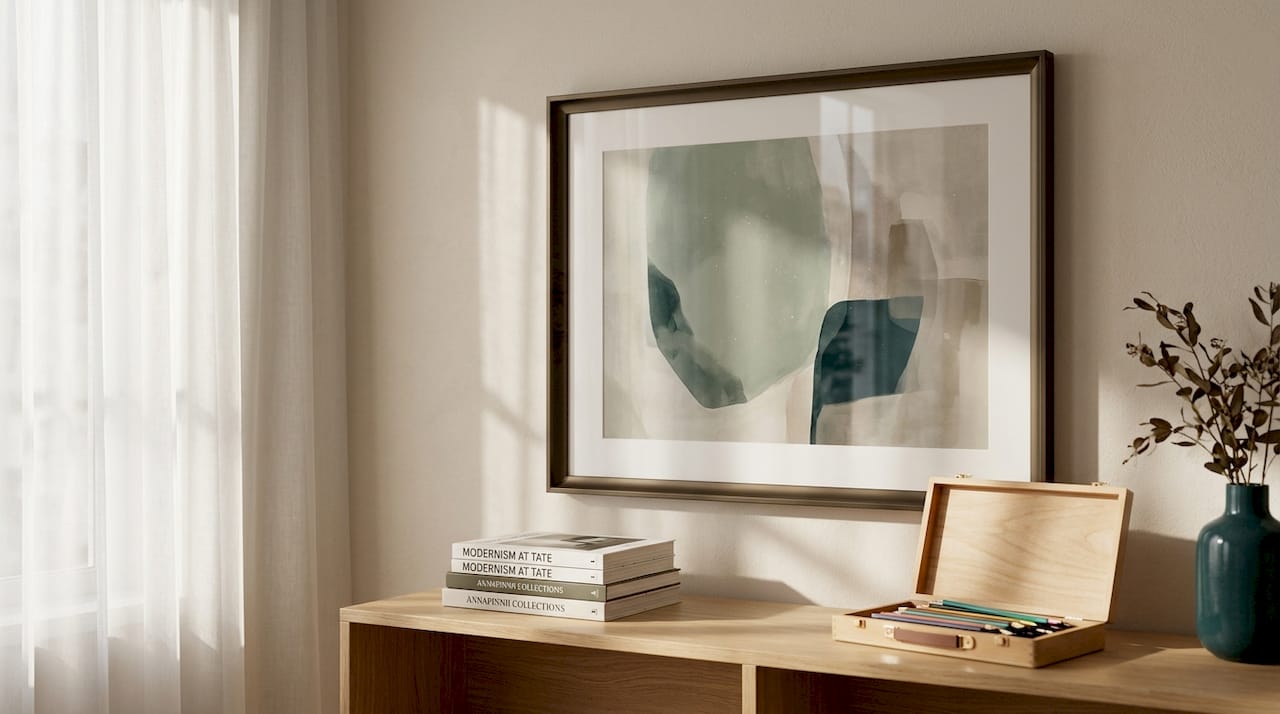
Original small artworks and miniatures are the most personal choice. Buying an original directly supports the artist, and the recipient gets something that exists nowhere else in the world. These make strong gifts for collectors or anyone who takes their home environment seriously.
Art gifts for creative kids follow different rules entirely. Beginner-friendly kits with a sketchbook, colored pencils, and washable paints outperform elaborate professional sets. Simplicity reduces overwhelm and actually increases creative output. You can also consider experience-based creative gifts that pair supplies with a class or workshop.
Art supplies for practicing artists require a different approach. Artists prefer consumables: quality paper, archival pencils, good paint. Decorative supply sets that look nice in a box but perform poorly are consistently disappointing. If you know what medium the artist works in, buy the best consumable version of what they already use.
Pro Tip: For a practicing artist, a single pad of professional-grade watercolor paper or a set of lightfast colored pencils will be used and appreciated far more than a decorative gift set.
3. Framing and preservation options compared
Framing is not decoration. It is protection. The wrong glazing choice can allow UV damage that fades a print within a decade. Here is how the main options compare.
| Option | UV protection | Weight | Safety | Best for |
|---|---|---|---|---|
| Museum glass | ~99% UV filtered | Heavy | Fragile | Paper works, static-sensitive media |
| UV acrylic | High (varies by brand) | Light | Shatter-resistant | Large works, transport-prone pieces |
| Standard glass | Minimal | Medium | Fragile | Temporary or low-value framing only |
| No glazing | None | N/A | N/A | Canvas paintings only |
Museum glass filters about 99% of UV radiation and reduces reflections better than UV acrylic, making it the preferred choice for paper-based artworks in stable environments. UV acrylic is lighter and shatter-resistant, which makes it the practical choice for large works or anything that will be moved or shipped after framing.
Acid-free matting and backing are non-negotiable for paper-based works. Standard mats are often made from wood pulp with high acid content, and that acid migrates into the artwork over time, causing yellowing and brittleness. Acid-free materials prevent this entirely.
Framing decisions should account for the artwork’s size, medium, and display environment. A small charcoal drawing in a humid room needs museum glass and sealed backing. A large canvas print in a dry living room may do fine with UV acrylic.
Pro Tip: If you are giving a print as a gift, consider including a note with framing recommendations. Most recipients will not know the difference between archival and non-archival framing, and that note could save the artwork.
4. Shipping and delivery checklist for art gifts
Sending art as a gift adds a layer of risk that most people underestimate. Follow these steps to protect the work in transit.
- Create a detailed inventory record. Document the artwork’s title, medium, dimensions, and estimated value. Take multi-angle, high-resolution photos before packaging. Pre-shipment documentation is the foundation of any insurance claim if damage occurs.
- Use appropriate packaging materials. Glassine paper protects the surface. Corner protectors guard edges. Foam or bubble wrap provides cushioning. For originals or framed works, a custom-built crate is the safest option.
- Choose the right carrier. For high-value pieces, use a professional fine arts shipper. For prints under $200, a reputable courier with tracking and declared value coverage is usually sufficient.
- Label the package clearly. Mark the package “Fragile,” “This Side Up,” and “Do Not Bend” on all relevant sides. Proper labeling reduces mishandling and strengthens your position in any insurance dispute.
- Inspect immediately upon delivery. Open the package in front of the carrier if possible. Document any damage with photos before moving the artwork. File insurance claims promptly. Delayed claims are frequently denied.
5. How to apply this checklist to your final decision
Once you have worked through the criteria, categories, framing, and shipping considerations, the final step is matching everything to your specific situation.
Use this reference table to align your choice with your budget and recipient:
| Recipient type | Recommended gift | Documentation needed | Framing priority |
|---|---|---|---|
| Art collector | Original painting or signed print | Full provenance packet | High (museum glass) |
| Home decorator | Giclée print, limited edition | Signed COA + invoice | Medium (UV acrylic) |
| Practicing artist | Quality consumable supplies | Receipt only | None |
| Creative child | Beginner art kit | Receipt only | None |
| General art lover | Open edition print or small original | COA + invoice | Medium |
A few additional points worth keeping in mind:
- Always include the provenance packet inside the gift, not just in your files. The recipient needs to hold that documentation.
- If you are buying a print, confirm the edition size. An edition of 10 is very different from an edition of 500 in terms of collectability.
- Ask the seller or artist for a short written note about the work. That context becomes part of the gift and adds meaning the recipient will remember.
- A comprehensive gift planning checklist can help you track documentation, shipping, and framing tasks across multiple gifts if you are buying for several people.
What I have learned from years of gifting art
I have made most of the mistakes covered in this article. I have given prints without documentation and watched them lose credibility over time. I have skipped the acid-free mat to save money and regretted it within a few years when the paper started to yellow at the edges. I have also seen the opposite: a properly framed, well-documented limited edition print become one of the most treasured things someone owns.
What I have come to believe is that the documentation and framing are not secondary details. They are the gift. The artwork is the emotional center, but the provenance packet and the archival framing are what tell the recipient that this was chosen with care and intention. Anyone can buy a print. Not everyone takes the time to do it properly.
The other thing I have learned is that original art, even small and modestly priced, creates a different kind of connection than a reproduction. When you give someone an original, you are giving them something that exists once. That singularity matters to people more than they expect it to.
My honest advice: spend less on the price tag and more on the quality of the documentation and framing. A $150 signed print in a properly archival frame with a full provenance packet is a better gift than a $400 open-edition poster in a standard frame with no paperwork.
— Anna
Meaningful art gifts from Annapinnii
Annapinnii’s collection of original paintings and limited edition fine art prints is built around exactly the criteria covered in this checklist. Each print comes with signed documentation, edition information, and clear medium descriptions. The work itself draws from themes of belonging, calm, and the quiet spaces people return to in their minds.
If you are looking for a gift that meets the 2026 standard for quality and provenance, the You Were Never Lost fine art print is a strong starting point. For buyers seeking an original, the Almost What You Thought original painting offers something singular and fully documented. Both are available with gifting support and ship internationally with proper protective packaging.
FAQ
What documents should an art gift include?
A properly documented art gift should include a signed Certificate of Authenticity, a seller invoice, and an edition statement. These form the provenance packet that travels with the artwork to the recipient.
How long do giclée prints last?
Giclée prints made with pigment-based inks on acid-free cotton-rag paper can last 100 to 200 years under standard indoor display conditions, provided they are protected from UV light with appropriate framing.
What framing is best for a print gift?
Museum glass is the best choice for paper-based works in stable environments, filtering about 99% of UV radiation. UV acrylic is the practical alternative for large or transport-prone pieces.
What art supplies do artists actually want as gifts?
Practicing artists consistently prefer consumable supplies such as quality paper, archival pencils, and paint over decorative gift sets. Buy the best version of whatever medium they already work in.
Is an open-edition print a good art gift?
Open-edition prints can be beautiful and affordable, but they carry no collectability value. For a gift with lasting significance, a signed limited edition print with proper documentation is a better choice.
0 kommenttia