

Most people assume emotional connection to art is something you either feel or you don’t. That assumption is wrong. This art and emotional connection guide breaks down the science, the practice, and the practical design decisions that determine whether art in your home stays decorative or becomes genuinely meaningful. You will find research-backed strategies for deepening your own relationship with art, guidance for parents who want to use art as an emotional tool with children, and clear thinking on what art therapy actually means versus what most people think it means.
Table of Contents
- Key takeaways
- The psychology behind art and emotional connection
- Art therapy vs. everyday art practice
- Practical steps to deepen your emotional connection through art
- Designing emotionally safe home spaces with art
- Common challenges when connecting emotionally with art
- My perspective on art and emotional connection
- Bring emotionally resonant art into your home
- FAQ
Key takeaways
| Point | Details |
|---|---|
| Emotional connection is learnable | Art’s emotional impact is built through intentional practice, not innate sensitivity or special knowledge. |
| Art affects multiple brain pathways | Research identifies dozens of psychological mechanisms explaining how art reduces anxiety and depression. |
| Art therapy has specific credentials | Regulated art therapy requires ATR or ATR-BC certification; home art practice is valuable but different. |
| Consistency beats technical skill | Regular, low-stakes engagement with art builds emotional awareness more reliably than occasional deep experiences. |
| Environment shapes the effect | Where and how you display art in your home directly influences its emotional impact on your family. |
The psychology behind art and emotional connection
The idea that art “just speaks to you” is not wrong, but it is incomplete. Research now shows that arts engagement activates at least 50 distinct behavioral and psychological mechanisms simultaneously. That is not a metaphor. It is a measurable, multi-pathway process involving memory retrieval, social cognition, physiological arousal, and meaning-making all happening at once.
Researchers use the term “arts exposome” to describe how repeated, everyday arts participation builds cumulative effects on mental health. Think of it like physical fitness. One workout does not transform your body. Consistent movement over weeks and months does. Art works the same way. The more regularly you engage, the more those neural pathways strengthen, and the more reliably art can shift your emotional state.
There is also an important distinction between receptive and active engagement. Receptive engagement means viewing, listening, or observing art made by others. Active engagement means creating something yourself. Both work, but they work differently:
- Receptive engagement (viewing paintings, listening to music) tends to produce immediate emotional responses and is easier to access on low-energy days.
- Active engagement (painting, drawing, making) builds longer-term emotional awareness and a sense of agency.
- Combined approaches produce the most sustained benefits, according to meta-analyses on group arts interventions.
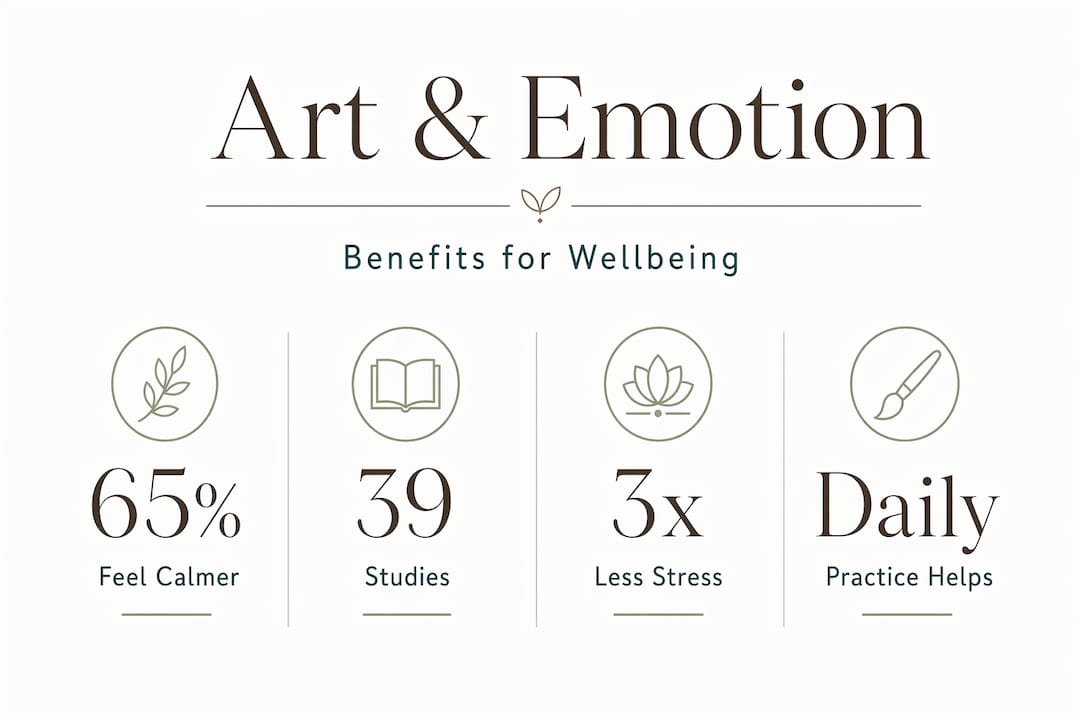
The evidence on outcomes is substantial. A meta-analysis of 39 studies found that group arts interventions reduce depression with an effect size of d=0.70 and anxiety with d=0.76. Those are large effects, comparable to pharmacological treatments in some populations. For children and adolescents specifically, art-based interventions reduce depressive symptoms with a standardized mean difference of -0.72 across 12 randomized controlled trials.
Pro Tip: If you are new to intentional art engagement, start with receptive practice. Spend 10 minutes looking at a single painting without checking your phone. Notice what shifts in your body before you try to name what you feel.
Art therapy vs. everyday art practice
This distinction matters more than most people realize. The term “art therapy” gets applied loosely to everything from adult coloring books to journaling with doodles. That loose usage creates real confusion, and sometimes real harm, when people expect therapeutic outcomes from activities that were never designed to deliver them.
Art therapy is a regulated clinical profession. Practitioners hold credentials including ATR (Registered Art Therapist) and ATR-BC (Board Certified), granted by the Art Therapy Credentials Board. They are trained to work with trauma, grief, developmental disorders, and serious mental health conditions. Their work is clinical, structured, and supervised.
Home-based art practice is something different. It is not lesser. It is just honest about what it is. You can use art-making as a daily emotional practice, a way to process stress, or a tool for family connection, and those uses are genuinely valuable. The key is understanding the boundary.
“Non-clinical art-making and art viewing hold promise for emotional connection but should not replace professional mental health treatment when needed.” — American Art Therapy Association
Here is how to keep your home practice safe and grounded:
- Do not frame art-making as a substitute for therapy if you or a family member is experiencing serious psychological distress.
- If a provider or program calls itself “art therapy,” ask for the practitioner’s ATR or ATR-BC credentials.
- Approach home art practice with curiosity rather than clinical expectation. The goal is emotional awareness, not diagnosis or treatment.
- If you notice that art-making consistently surfaces overwhelming emotions, that is a signal to consult a credentialed professional.
The role of emotion in art practice at home is real and meaningful. It just operates within a different frame than clinical care. Understanding that frame protects you and makes your practice more sustainable.
Practical steps to deepen your emotional connection through art
Knowing that art can affect your emotional state is useful. Knowing how to actually create that connection in your daily life is what changes things. Here is a sequence that works whether you are engaging alone, with a partner, or with children.
-
Start with intention, not outcome. Before you pick up a brush or sit in front of a painting, spend 60 seconds naming what you are carrying emotionally. You do not need to solve it. Just name it. This primes your nervous system to receive or express something specific.
-
Use color deliberately. Color is not decoration. It is a direct input to emotional processing. Warm tones (ochre, terracotta, deep red) tend to activate and energize. Cool tones (slate blue, sage, soft gray) tend to calm. When you are choosing art for your home or picking colors for a creative session, treat color as a tool, not an aesthetic preference.
-
Keep sessions short and tracked. Research on structured arts engagement recommends 10 to 20 minute focused sessions rather than long, open-ended ones. After each session, note your emotional state on a simple 1-10 scale. Track the state, not the artwork. Over weeks, patterns emerge that are genuinely informative.
-
Embrace imperfect output. The biggest barrier to active art engagement for adults is the belief that the result needs to be good. It does not. The emotional value of making art comes from the process of expression, not the quality of the product. Children understand this instinctively. Adults have to relearn it.
-
Rotate between making and viewing. Alternating between receptive and active engagement is more effective than committing exclusively to one mode. On days when energy is low, sit with a painting you love. On days when you have more capacity, make something.
-
Let children lead sometimes. When engaging in art with kids, follow their creative choices rather than directing them. Children benefit from expressing emotions through creative play rather than being asked to verbalize feelings. Their instinct toward color, mess, and spontaneity is not a problem to manage. It is a model worth observing.
-
Give yourself permission to choose. Research shows that individual preference in arts activities significantly improves wellbeing outcomes. There is no single correct art form. If abstract painting does nothing for you but a detailed pencil sketch feels meditative, that is your answer.
Pro Tip: Keep a small art-making kit in a visible spot in your home, not stored away in a closet. Accessibility removes the friction that prevents consistent practice. A tin of watercolors and a sketchpad on the kitchen table gets used. A full art supply kit in the basement does not.
Designing emotionally safe home spaces with art
The environment where you live and spend time is not neutral. It either supports emotional expression or suppresses it. Art is one of the most direct tools you have for shaping that environment intentionally.
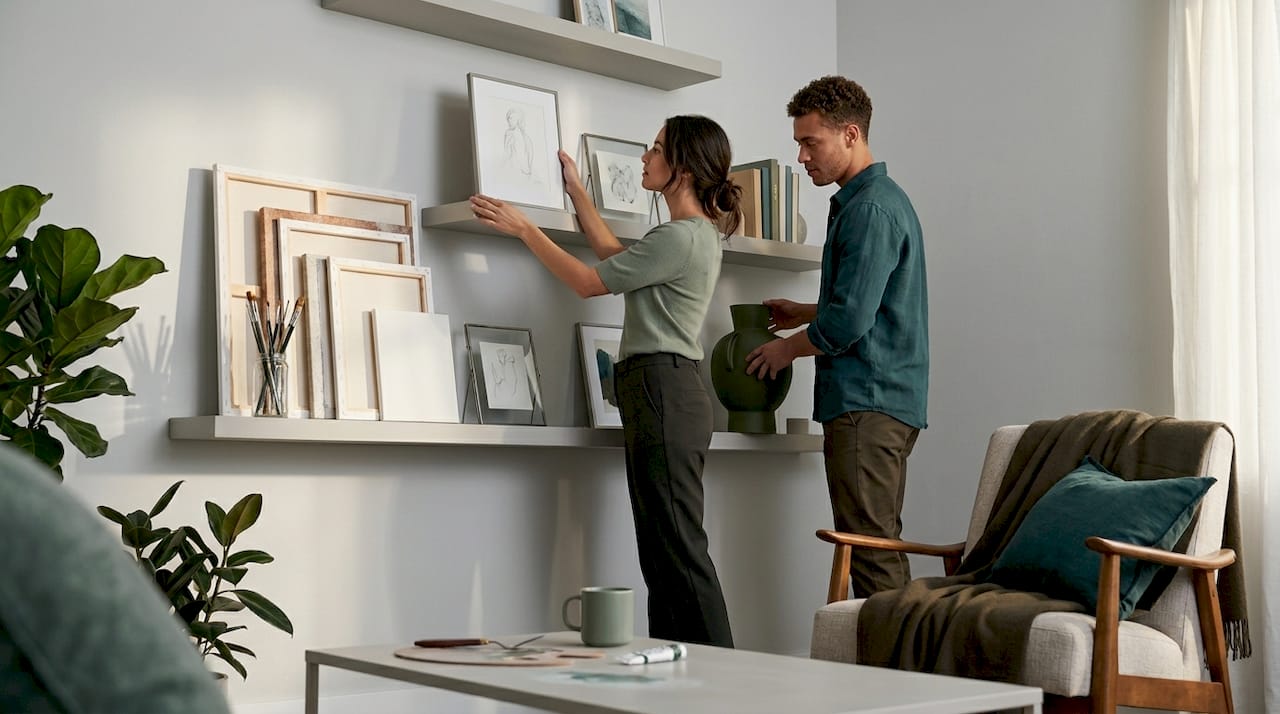
Research on environment and arts interventions shows that setting significantly influences how much emotional benefit people receive from art engagement. A home designed with emotional resonance in mind functions differently from one where art is purely decorative.
Here is how to think about it practically:
| Approach | Emotionally neutral space | Emotionally resonant space |
|---|---|---|
| Art selection | Chosen for color matching or trend | Chosen for personal meaning or emotional response |
| Display height | Standard eye level, uniform | Varied, including low displays for children |
| Art rotation | Static, unchanged for years | Rotated seasonally or with life events |
| Family involvement | Adult-curated only | Children’s artwork displayed alongside adult art |
| Intention | Decoration | Emotional communication and expression |
A few specific practices make a measurable difference:
- Display children’s artwork at their eye level, not yours. This communicates that their emotional expression belongs in the shared space.
- Create a single dedicated wall or corner where the art changes regularly. This trains the household to notice and respond to visual changes rather than tuning them out.
- Choose at least one piece of art that you find genuinely moving, not just attractive. There is a difference, and your nervous system knows it.
- Consider creative activities for family bonding that involve multiple generations, including grandparents, as shared art experiences build emotional memory across age groups.
The goal is a home where art is not wallpaper. It is a participant in the emotional life of the people who live there.
Common challenges when connecting emotionally with art
Even people who genuinely want a deeper relationship with art hit predictable walls. Recognizing them in advance makes them easier to move through.
-
Feeling disconnected or numb in front of art. This is more common than people admit, and it is not a character flaw. Emotional disconnection from art often signals that the art itself is not the right match, or that the viewer is carrying too much cognitive load to be present. The fix is simpler than it sounds: slow down, reduce distraction, and try a different piece.
-
Believing emotional connection requires art knowledge. You do not need to know art history to feel something in front of a painting. What makes art emotionally resonant is not intellectual context. It is personal resonance. A painting of a mother and child can move someone who has never heard of the artist because it speaks to something universal.
-
Perfectionism blocking active engagement. Adults who were told they were “not artistic” as children carry that message into adulthood. The result is avoidance of art-making entirely. Recognizing that the emotional value of making art is in the process, not the product, is the single most useful reframe available.
-
Expecting immediate results. Building emotional connection through art is gradual. It combines intentional creation, reflection, and environmental support rather than producing an instant experience. Patience with the process is not optional. It is the process.
-
Mood mismatch. Some days, the art you usually love does nothing for you. That is normal. Emotional states fluctuate, and art engagement should flex with them rather than being treated as a fixed ritual.
My perspective on art and emotional connection
I have spent years making art and watching how people respond to it, and the assumption I find most limiting is the idea that you need to understand art to connect with it. You do not. What I have learned is that the connection comes before the understanding, not after.
What surprises people most when they start engaging with art intentionally is how quickly children recalibrate their own practice. I have seen adults loosen up completely after watching a child approach a blank page with zero hesitation and total commitment. That is not naivety. That is the emotional honesty that most adults have been trained out of.
The other thing I have found is that consistency matters far more than intensity. One powerful experience at a gallery does not build an emotional relationship with art. Fifteen minutes with a painting you love, three times a week, does. The accumulation is where the change happens. That is true whether you are making art, living with it, or both.
The uncomfortable truth is that emotional connection with art requires you to slow down in a way that feels almost countercultural. But the research supports it, and so does lived experience. Start small, stay consistent, and let the art do its work.
— Anna
Bring emotionally resonant art into your home
Annapinnii creates original paintings and fine art prints designed specifically to carry emotional weight in the spaces where you live. Each piece is rooted in themes of belonging, healing, and the quiet that most of us are looking for. If you have been reading this guide and thinking about what art in your home could actually feel like, rather than just look like, that is exactly the gap Annapinnii’s work is built to fill.
The original painting “I Stayed a Little Longer” is one of the most personally resonant pieces in the collection, designed to invite reflection and a sense of emotional safety. For those looking for accessible options, the fine art prints collection brings that same emotional depth into a range of home environments and budgets. If you want a specific piece with particular meaning, “You Were Never Lost” is a limited edition print built around the feeling of finding your way back to yourself.
FAQ
What makes art emotionally resonant?
Art becomes emotionally resonant when it activates personal memory, universal themes, or physiological responses in the viewer. Research shows that arts engagement triggers multiple brain pathways simultaneously, including emotional, cognitive, and social processing systems.
Is art therapy the same as using art for emotional wellbeing at home?
No. Art therapy is a regulated clinical profession requiring ATR or ATR-BC credentials. Home art practice supports emotional wellbeing but is not a clinical intervention and should not replace professional mental health care when needed.
How do I start building an emotional connection with art?
Begin with short, intentional sessions of 10 to 20 minutes, alternating between viewing art and making it. Track your emotional state before and after each session rather than evaluating the artwork itself.
Can art help children with emotional expression?
Yes. Children benefit significantly from creative outlets for emotional expression, particularly when they are not required to verbalize feelings. Art-based interventions show a standardized mean difference of -0.72 in reducing depressive symptoms among children and adolescents.
How often should I engage with art to feel emotional benefits?
Consistency matters more than duration. Regular engagement several times per week, even in short sessions, builds cumulative emotional benefits more effectively than occasional intense experiences.
0 kommenttia